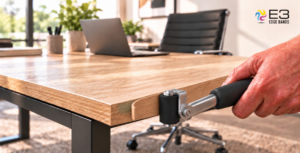

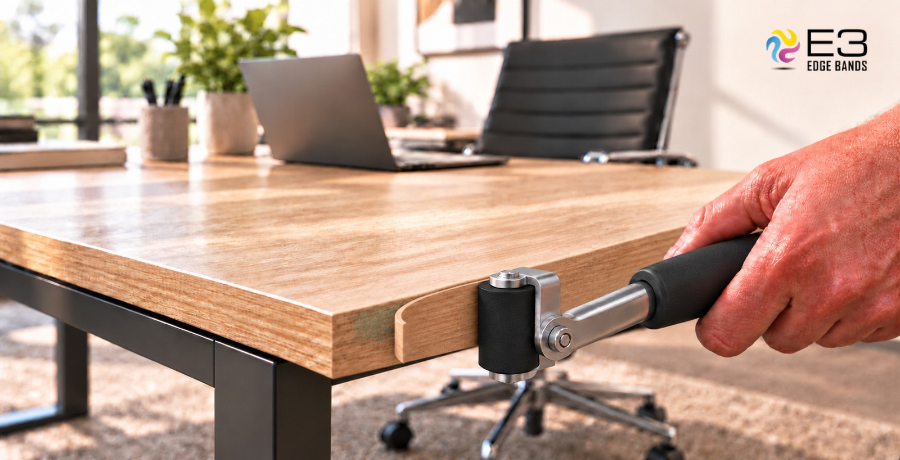
Edge banding tape peeling is a common furniture finishing problem that affects both appearance and durability. When the tape starts lifting from cabinets, wardrobes, tables or shelves, exposed board edges become vulnerable to moisture and everyday damage.
The key points include poor adhesive bonding, incorrect application temperature, uneven pressure, moisture exposure & improper surface preparation.
Understanding the reasons behind edge banding tape peeling helps furniture manufacturers, carpenters and homeowners identify problems early. This guide explores practical repair methods, common application mistakes and preventive measures for achieving clean, durable furniture edges.
Why Does Edge Banding Tape Start Peeling?
Edge banding protects exposed furniture panels against several critical issues. However, certain issues can gradually weaken its attachment.
Understanding the following causes helps identify edge banding defects before they become serious.
1. Poor Adhesive Quality
One major reason is the use of low-grade adhesive. If the glue fails to bond properly with the panel and tape backing, the edges begin lifting.
Common edge banding adhesive problems include uneven glue distribution, incompatible adhesive formulations and insufficient bonding strength.
Choosing the correct adhesive for the edging material and application equipment helps create a more reliable bond.
2. Incorrect Temperature & Pressure
Temperature & pressure directly affect bonding quality during machine application.
If the adhesive temperature is too low, the glue may not flow or wet the surfaces properly. Excessive heat can damage the adhesive or edging material.
Similarly, insufficient roller pressure can leave gaps between the tape and furniture panel.
Above mentioned problems become visible after installation, especially around corners.
3. Moisture and Heat Exposure
Excessive moisture and temperature changes can weaken the adhesive bond over time.
Kitchen cabinets, bathroom furniture and other moisture-prone areas may experience edge banding tape coming off when water enters exposed joints.
Although PVC edging provides useful surface protection, the underlying adhesive and board material must also be suitable for the surrounding conditions.
4. Improper Surface Preparation
Dust, wood particles, oil and uneven panel edges can interfere with adhesion.
When edge banding is applied over contaminated or rough surfaces, the glue cannot establish consistent contact.
Such edge banding defects may initially appear as small gaps before developing into noticeable peeling.
Cleaning and preparing panel edges before application significantly reduces this risk.
How to Fix Edge Banding Tape Peeling Effectively?
Knowing how to fix edge banding depends on whether the tape is slightly loose, partially detached or completely damaged.
The following methods can help restore furniture edges.
-
Inspect the damaged edges
-
Clean the surface properly
-
Apply a compatible adhesive
-
Press & allow proper bonding
What Are the Most Common PVC Edge Banding Issues?
PVC edge banding is widely used in modern furniture because it offers flexibility, decorative finishes and protection for exposed panel edges.
However, incorrect processing can create several finishing problems.
Common PVC edge banding issues include:
- Peeling edges
- Visible lines caused by the use of glue
- Uneven finishing
- Edge whitening
- Gaps around corners
Using properly selected materials from manufacturers such as E3 Edgeband, alongside suitable machinery settings, supports more consistent furniture finishing.
How Can You Prevent Edge Banding Tape Peeling?
Preventing edge banding tape peeling requires attention to material selection, processing conditions and everyday furniture maintenance.
1. Choose Suitable Edging Materials
Select tapes according to panel thickness, furniture application and expected usage conditions.
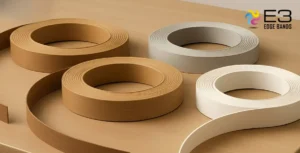
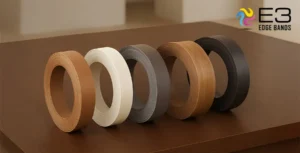
We offers PVC edging options in different widths, thicknesses, colours and finishes, helping manufacturers match edging materials with furniture panels.
Material compatibility always becomes essential for achieving expected performance.
2. Maintain Correct Application Settings
Always check the recommended adhesive temperature, feed speed and roller pressure before starting production.
Conduct a trial application when changing adhesive brands, edging materials or machinery settings.
This helps identify edge banding application problems before they affect an entire production batch.
3. Store Materials Correctly
Keep edging rolls and adhesives in suitable storage conditions, away from direct sunlight, excessive heat and contamination.
Follow the relevant manufacturers’ recommendations for temperature, storage and handling.
Appropriate storage helps maintain material consistency during application.
4. Inspect Finished Furniture
Inspect edge joints for lifting, gaps or visible adhesive irregularities.
Even minor edge banding defects should be corrected promptly to prevent moisture entering the underlying panel.
For consistent furniture production, combining proper installation practices with reliable materials such as E3 Edgeband can contribute to cleaner, more uniform finishing results.
When Should You Replace Peeling Edge Banding Tape?
Minor peeling can often be repaired, but replacement becomes necessary when the original tape is severely damaged.
Consider replacement when:
- The edging has cracked, warped or lost its original shape.
- Repeated adhesive repairs fail to maintain a secure bond.
- Moisture damage has affected the underlying panel.
- Extensive separation makes accurate repositioning difficult.
When replacing damaged edging, remove the old material carefully, prepare the surface and select a compatible replacement.
Our Edgeband provides various decorative edging options suitable for coordinating with laminates and pre-laminated furniture surfaces.
Conclusion
Edge banding tape peeling can affect furniture appearance, expose panel edges and increase maintenance requirements. However, most problems can be addressed through proper surface preparation, compatible adhesives, controlled application settings and regular inspection.
Understanding edge banding adhesive problems, identifying early warning signs and following appropriate repair techniques can help maintain furniture quality.
Whether manufacturing new cabinets or repairing existing furniture, choosing suitable materials and applying them correctly is essential for a lasting finish.
Find the Right Edge Finishing Solution
Give your furniture a clean, professional finish with quality edging solutions from E3 Edgeband. Explore a versatile selection of shades, textures and thicknesses designed to complement modern furniture applications.
Frequently Asked Questions (FAQs)
- What causes edge banding tape peeling?
Edge banding tape peeling commonly occurs due to poor adhesive bonding, incorrect application temperature, inadequate roller pressure, contaminated surfaces or prolonged moisture exposure.
- How to fix edge banding tape coming off furniture?
Clean the affected panel edge, remove loose adhesive and apply a compatible bonding product. Reposition the tape, apply consistent pressure and allow the adhesive to set according to its instructions.
- Can edge banding glue failure be prevented?
Yes. Edge banding glue failure can often be prevented through correct adhesive selection, proper machine settings, clean panel surfaces and suitable material storage.
- What are common PVC edge banding issues?
Common PVC edge banding issues include peeling, visible glue lines, uneven trimming, edge whitening and gaps around corners. Proper machine calibration and suitable materials help minimise these problems.